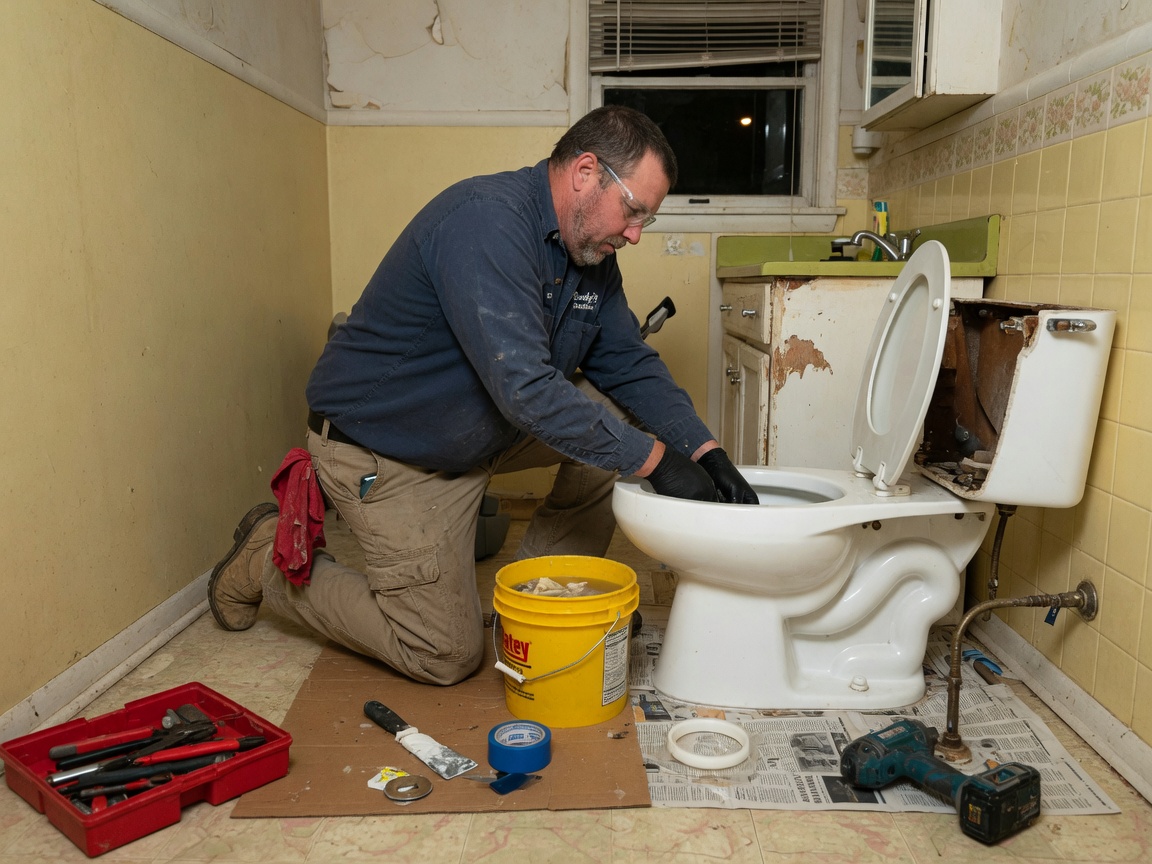
Guthrie homes built before the 1950s in the Guthrie Historic District and around the State Capitol Building often have original cast iron or galvanized lines feeding toilets. These lines corrode at the flange and wax ring area, creating slow leaks that stain subfloors in Capitol Hill properties. Hot summers increase water demand and can accelerate mineral buildup in Logan County water, which wears out flappers and fill valves faster than in milder climates.
When a toilet runs constantly or rocks on the base, the first check is the flange connection to the soil pipe. In East Guthrie, shifting clay soils from seasonal rains can tilt the bowl and crack the wax seal. Mild winters reduce freeze risk but do not eliminate condensation issues inside tanks during humid periods, leading to hidden corrosion on trip levers and tank bolts.
Repair work here focuses on matching existing pipe threads and avoiding unnecessary wall or floor cuts in older Scottish Rite Temple area homes. Technicians carry both modern PVC adapters and legacy brass parts because mixing materials without proper dielectric unions causes future leaks. Homeowners in Downtown Guthrie frequently need the supply shutoff valve replaced at the same time since original multi-turn stops seize after decades of use.
Testing after repair includes a full bowl flush cycle plus a 30-minute water level check to catch any seepage under the base. This step prevents callbacks common when only the flapper is swapped without addressing the flange or supply line condition.
Technician insight
In Guthrie, the thing that catches most people out with Toilet Repair is the condition of the original flange in homes built before 1940 around the Guthrie Historic District. Clay soil movement near East Guthrie and Capitol Hill often tilts the bowl just enough to break the seal without obvious rocking, and the mild winters mean homeowners rarely think to check until a stain appears on the ceiling below.
Slow Leak in East Guthrie Home
A homeowner noticed water stains on the floor near the toilet in an older East Guthrie house. Inspection showed the wax ring had failed due to slight soil settlement common in that part of Logan County. The flange was cleaned, a new ring installed, and the supply valve replaced at the same time. No further leaks appeared after testing.
Toilet Repair Services We Offer
✓Flush Valve Replacement
Replaces the flush valve assembly to stop constant running and restore proper water conservation in older Guthrie tanks.
✓Tank Leak Repair
Locates and seals cracks or corroded bolts inside the tank, common in homes near the State Capitol Building with decades-old fixtures.
✓Toilet Flange Repair
Repairs or replaces damaged flanges where the toilet meets the floor drain, addressing shifts from Logan County clay soils.
✓Fill Valve Replacement
Installs a new fill valve to eliminate noisy refills and overfilling caused by mineral deposits from local water.
✓Wax Ring Replacement
Removes the old seal and installs a new wax or rubber ring to stop floor leaks without disturbing surrounding tile in East Guthrie homes.
✓Supply Line Shutoff Replacement
Swaps seized or leaking shutoff valves under the tank, a frequent need in Downtown Guthrie properties with original plumbing.
Toilet Repair Cost in Guthrie, OK
| Service | Typical Range | What Affects It |
|---|---|---|
| Flush valve or fill valve service | $150–$300 | Higher when original tank bolts must be cut out |
| Wax ring and flange work | $200–$450 | Increases if subfloor repair is required in historic homes |
| Supply shutoff valve replacement | $125–$250 | Depends on whether wall access is needed |
| Full toilet reset with new parts | $275–$500 | Varies with bowl condition and floor type |
Ranges are typical for Guthrie, OK and confirmed with an exact written quote before any work starts.
How it works
- 1
Initial Inspection
Check bowl stability, tank components, flange condition, and supply valve operation on site.
- 2
Diagnosis and Quote
Identify the exact failure point and provide an upfront price before any parts are ordered or work begins.
- 3
Component Repair or Replacement
Remove failed parts, clean mating surfaces, and install new seals or valves matched to the existing piping.
- 4
Leak Test and Cleanup
Run multiple flush cycles, inspect for seepage, and restore the area to its original condition.
Pricing
Upfront quotes given after inspection; final cost depends on parts needed and access in older homes.