2026-08-29 ·
What Red Dirt Does to Buried Water Lines in Logan County
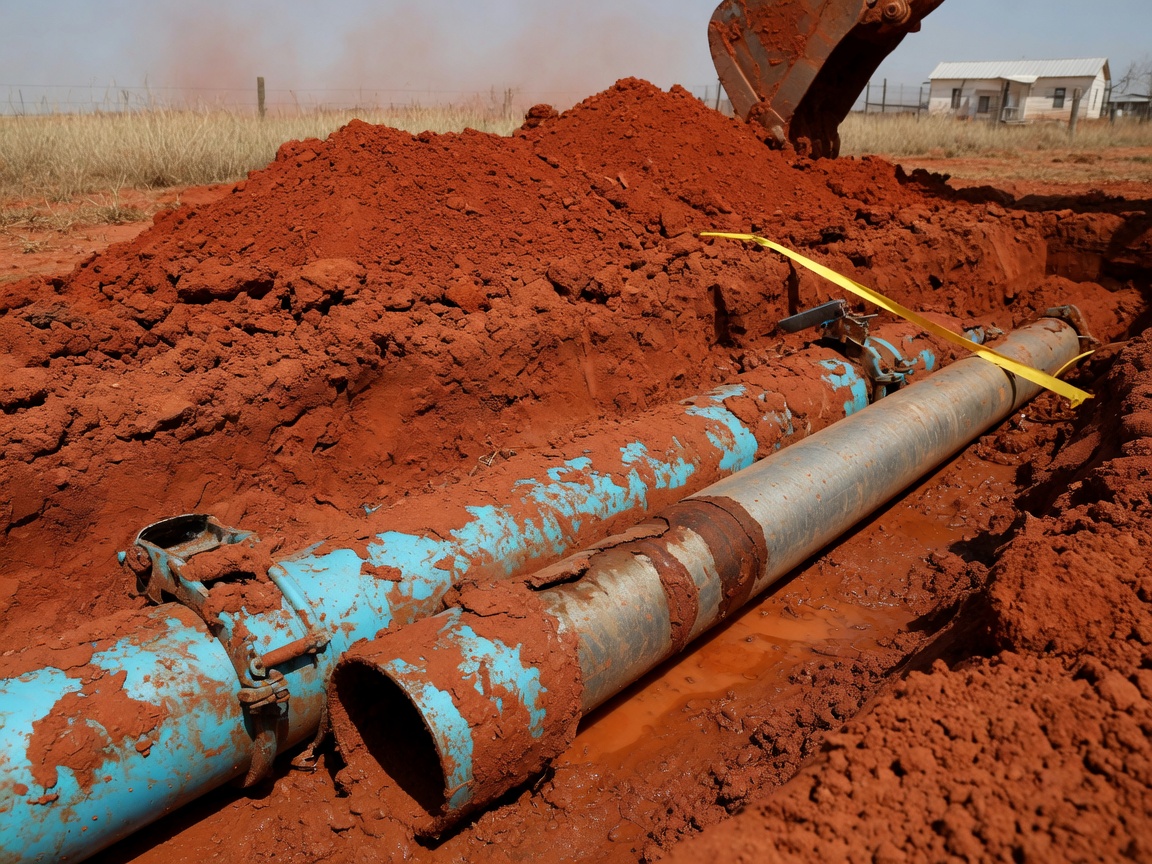
Red dirt in Logan County moves and corrodes buried water lines faster than many homeowners expect, especially where older galvanized or copper lines run under properties in Downtown Guthrie and East Guthrie. The iron-rich clay soil holds water during humid subtropical summers, then dries and cracks in mild winters, stressing joints and accelerating rust on metal pipe surfaces.
How Logan County Red Dirt Moves and Corrodes Pipes
The red clay common across Logan County changes volume with every rain cycle. During hot summers the soil expands when saturated, then contracts as it dries, placing repeated pressure on water lines buried three to four feet deep. This movement rubs against pipe walls and loosens fittings, particularly on older lines installed before modern bedding practices. In neighborhoods around the State Capitol Building and Scottish Rite Temple, many homes still rely on original galvanized steel that has already lost wall thickness from constant soil contact. The same red dirt also carries slightly acidic moisture that speeds oxidation on copper and steel, turning small pinholes into full leaks within a single season of heavy rain. Homeowners in Capitol Hill often notice unexplained drops in water pressure after extended wet periods because the soil has shifted sections of line enough to crack solder joints.
Soil Conditions Specific to Guthrie Neighborhoods
Downtown Guthrie and East Guthrie sit on heavier red clay deposits that retain more water than the sandier soils found closer to Stillwater. This retention keeps pipes in constant contact with corrosive moisture rather than allowing them to dry out between storms. The terrain near the Guthrie Historic District includes gentle slopes that direct runoff toward foundations, increasing the chance that water will pool around service lines. In contrast, properties in Capitol Hill often have shallower burial depths because of bedrock close to the surface, leaving lines more exposed to the daily expansion and contraction cycles. These local soil patterns explain why water line leaks appear more frequently on the west side of Guthrie than in the newer subdivisions between Guthrie and Edmond.
When to Check for Red Dirt Damage
Watch for sudden changes in water pressure or damp patches in yards along known water line routes. In Logan County the first visible signs often appear after the transition from summer heat to fall rains, when the soil begins its contraction phase. Older homes near the Scottish Rite Temple commonly show rust-colored water at outdoor spigots because corrosion flakes have entered the line from red dirt abrasion. If a line runs under a driveway or sidewalk, the added weight combined with soil movement can pinch the pipe and create a slow seep that only shows up on the monthly bill. Checking accessible valves and meter boxes after major weather shifts helps catch early movement before it requires full replacement.
Related Repairs Homeowners Often Need
When red dirt damage reaches a joint or fitting, many Guthrie properties also require leak detection to locate the exact break without unnecessary excavation. Similar soil pressure affects gas lines, so residents concerned about both services can review why Oklahoma clay soil cracks gas and water lines for additional context on local conditions. Properties in nearby Edmond face comparable red dirt challenges, though the slightly different drainage patterns there sometimes allow for longer pipe life before movement becomes an issue.